How to Spot and Repair Siding Holes and Cracks
When you spot a hole or crack in your siding, it’s a little like noticing a chip in your car’s windshield. It might seem minor now, but ignore it, and bigger problems are sure to follow. At POM Siding, we know that even small exterior issues can invite water, pests, and energy loss into your home or business.
The good news? With the right know-how and a careful eye, you can address many siding problems before they spiral. Let’s walk through what causes siding damage, how to spot it, and—most importantly—how to make repairs that last.
Why Holes and Cracks Form 🏚️
Siding is your building’s armor. But like any shield, it can take a beating over time. Here’s why you might see cracks, holes, or splits:
- Weather Extremes: Freeze-thaw cycles, pounding rain, hail, and wind-driven debris can weaken or puncture siding panels.
- Aging Materials: Over the years, siding materials dry out, shrink, or warp, making them more vulnerable.
- Animals & Insects: Birds, squirrels, and insects can chew or carve out holes for nesting.
- Accidental Impact: Lawn equipment, baseballs, or even a rogue grill can leave their mark.
- Improper Installation: Gaps or uneven seams from the start can turn into cracks down the road.
Small flaws may not seem urgent, but they’re a red carpet for moisture and drafts. The longer you wait, the more those little gaps widen.
How to Inspect for Damage
A proper siding inspection is part detective work, part routine maintenance. Here’s a simple checklist:
- Walk the Perimeter: Slowly circle your building, looking closely at all walls from ground to eaves.
- Check Under Eaves and Around Trim: Holes often hide near soffit, fascia, and trim where water collects.
- Probe Suspect Areas: Gently press on suspicious spots—softness or movement could mean hidden rot.
- Look for Discoloration or Stains: Water intrusion often leaves telltale streaks.
- Use a Flashlight: Early morning or late evening shadows can help highlight cracks.
- Inspect After Storms: High winds and hail can cause immediate, visible damage.
Regular siding inspection—ideally twice a year—can catch issues before they snowball. If you’re unsure, our siding inspection service offers expert eyes on your exterior.
Repair Steps for Each Siding Type
The approach to repairing holes and cracks depends on your siding material. Here’s a breakdown of best practices for each common type:
Vinyl Siding
- Small Cracks: Clean the area. Use exterior-grade caulk or a color-matched siding patch kit.
- Larger Holes: Cut out the damaged section if needed. Snap in a new vinyl panel, securing it with manufacturer-recommended fasteners.
- Finish: Blend edges with touch-up paint if required.
Fiber Cement Siding
- Hairline Cracks: Fill with a high-quality acrylic caulk. Smooth and let dry.
- Holes: Remove loose material. Patch with a fiber cement repair compound, let cure, then sand smooth.
- Paint: Always repaint over patches to seal and protect.
Wood Siding
- Small Holes: Wood filler or putty works for nail holes or minor dings. Sand after drying.
- Splits and Cracks: Use epoxy wood repair products for strength. Clamp if needed while drying.
- Rot: Replace sections that are soft or crumbling. Don’t just patch over rot—it spreads.
Metal Siding
- Tiny Dents or Holes: Aluminum or steel filler products work well. Sand before priming and painting.
- Corrosion: Scrape away rust, treat with rust-inhibitor primer, then patch and paint.
- Loose Panels: Refasten with corrosion-resistant screws or pop rivets.
Stucco Siding
- Hairline Cracks: Fill with flexible masonry caulk.
- Larger Holes: Chip out loose stucco, apply new stucco mix, and texture to match.
- Dry: Let cure properly—rushing can cause future cracks.
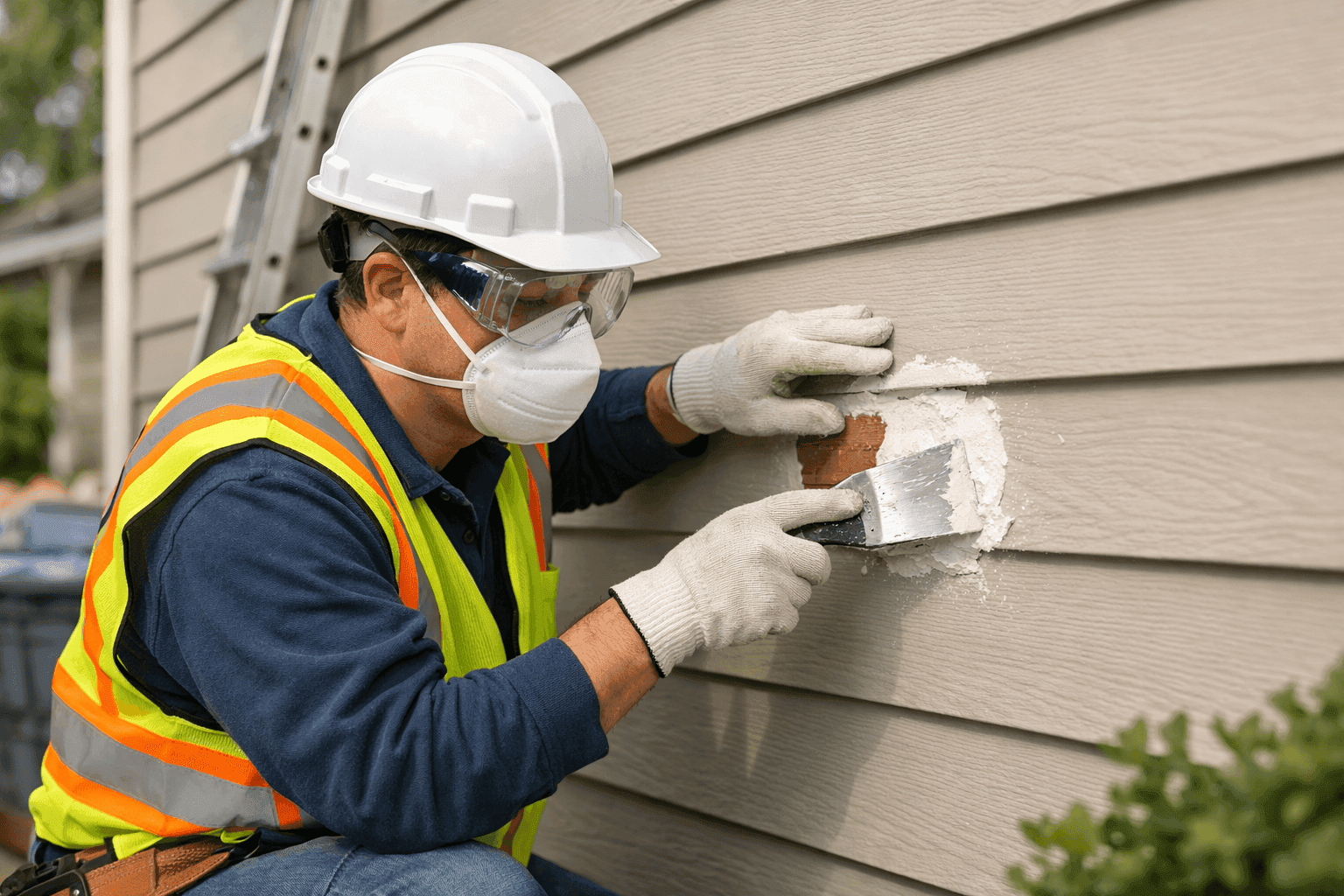
Tip: Always wear gloves, eye protection, and follow Occupational Safety and Health Administration (OSHA) guidelines when working at heights or with cutting tools.
Quick Safety Checklist ✅
Before you start, check the basics:
- Ladder is stable and set on level ground.
- Tools and materials within easy reach.
- Protective gloves and safety glasses on.
- Power lines and overhead obstructions noted.
- Never work alone if you’re on a high ladder—have someone nearby.
For larger repairs or high-up jobs, it’s safest to contact professionals trained in siding and soffit and fascia repair.
When to DIY and When to Call a Pro
Some fixes are satisfying weekend projects; others demand a professional’s touch:
- DIY: Small cracks, minor holes, or touch-up caulking.
- Call a Pro: Multiple holes, water behind siding, rot, mold, or hard-to-match materials.
If your siding feels spongy, bows outward, or you see mold, it’s time for a thorough siding maintenance checkup.
What POM Siding Pros Do on Arrival
Our process is thorough, methodical, and tailored to your siding needs:
- Detailed exterior inspection—identifying visible and hidden damage.
- Moisture assessment—checking for leaks behind panels.
- Material matching—sourcing the right replacement parts.
- Repair and seal—patching or replacing, then caulking and painting.
- Cleanup—leaving your property tidy and safe.
We always follow manufacturer guidelines and local building codes for every repair, ensuring long-lasting results.
Costs, Time, and Disruption
- Simple Patches: Often completed in a few hours, with minimal disruption.
- Panel Replacements: May take a day or two, depending on size and height.
- Material Costs: Vinyl and aluminum are affordable; fiber cement and wood cost more for repairs.
- Hidden Damage: If water or pests have gotten inside, repair costs can rise.
Pro tip: Budget-friendly fixes now can save thousands later by preventing major structural damage.
When Siding Holes and Cracks Are an Emergency
Sometimes, waiting isn’t an option:
- After a storm: Large holes, missing panels, or exposed sheathing demand immediate attention.
- Pest Intrusion: If critters are getting inside, act fast.
- Water Leaks: Interior stains, peeling paint, or musty smells mean water’s coming in.
Don’t hesitate to reach out for emergency siding services if you notice these red flags.
Common Mistakes to Avoid
- Ignoring Small Holes: They always get bigger.
- Using Interior Caulk: Only use products rated for exterior, all-weather use.
- Skipping Paint: Patches exposed to sun and rain without paint will fail.
- Improper Fasteners: Wrong nails or screws can cause rust stains and further damage.
Seasonal Considerations
- Spring & Fall: Ideal times for inspection and repair—moderate temperatures help materials cure properly.
- Winter: Extreme cold can make caulking and adhesives less effective.
- Summer: High heat may cause some siding types to expand, making repairs tricky if not timed right.
Materials and Tools Checklist 🛠️
- Putty knives and caulking guns
- Color-matched exterior caulk or patch kits
- Replacement panels or shingles
- Primer and exterior paint
- Sandpaper and safety gear
Siding Holes & Cracks FAQ
Q: Can I just cover a hole with caulk?
A: For tiny holes, yes. Larger gaps need a patch or replacement panel.
Q: Is water behind siding a big deal?
A: Absolutely. Moisture leads to rot, mold, and structural issues. Address it promptly.
Q: How often should I check my siding?
A: Twice a year, plus after major storms.
Preventing Future Issues 🌦️
An ounce of prevention really is worth a pound of repair:
- Regular Cleaning: Gentle washing removes dirt and pests that cause damage.
- Seal Gaps: Check caulk and flashing yearly.
- Trim Landscaping: Bushes and trees rubbing against siding wear it out.
- Gutter Upkeep: Clogged gutters dump water onto siding, creating rot.
- Paint or Seal: Maintain paint or stain to keep weather out.
A proactive siding inspection is your best defense. And if you’re planning new construction or upgrades, consider modern, durable materials that resist cracks and holes.
For those searching for high-value siding solutions, don’t miss our siding services in Glenview for both residential and commercial properties.
Don’t let a small siding hole become a big, expensive story. Whether it’s inspection, repair, or ongoing maintenance, POM Siding is here to help you keep your property safe, dry, and looking its best.
Call POM Siding now — or reach us anytime at 888-870-1065 .