The Role of Soffit and Fascia in Roof Ventilation
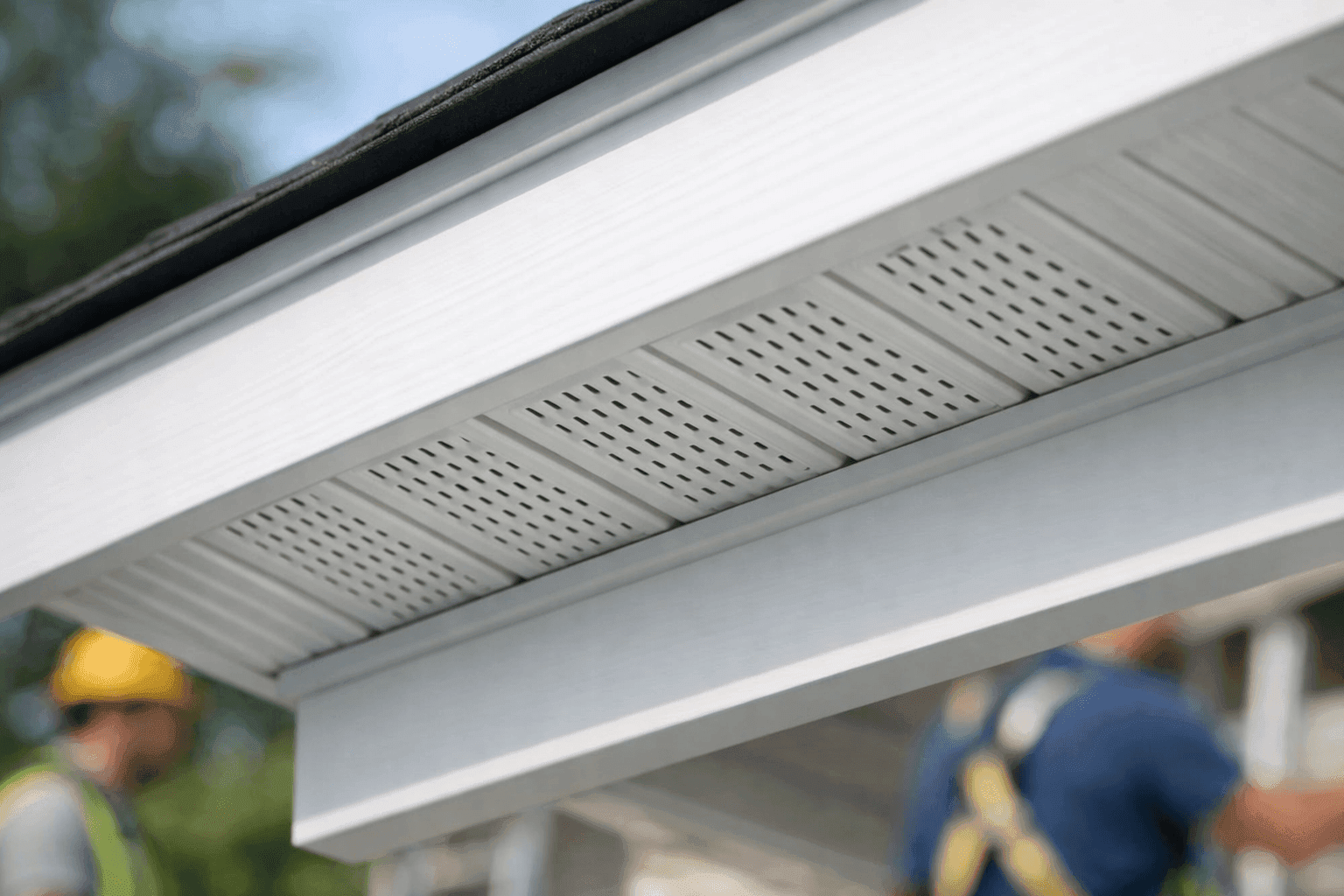
Your roof does more than keep the rain out. Beneath its surface, a silent system works day and night to protect your home from rot, mold, and skyrocketing energy bills. At the heart of this system? Soffit and fascia. These unsung heroes are critical for ventilation—yet they’re often overlooked until trouble strikes.
At POM Siding, we’ve seen what happens when airflow grinds to a halt. Let’s break down why soffit and fascia matter, how they keep your attic healthy, and the warning signs that should never be ignored.
Why Roof Ventilation Is Critical 🏠
Think of roof ventilation as your attic’s set of lungs. Without steady airflow, moisture builds up, wood begins to rot, and mold takes root. Ice dams form in winter, leading to leaks and costly siding repairs. The risk isn’t just cosmetic—neglected attic ventilation threatens your roof’s structural integrity and your family’s comfort.
A poorly ventilated attic is like a hot, stuffy car in summer. Temperatures soar, insulation bakes, and your cooling system has to work twice as hard. In winter, trapped heat melts the snow on your roof, only for it to refreeze at the eaves—this is how ice dams start.
Key reasons to prioritize ventilation:
- Prevents rot: Continuous airflow dries out condensation before it can soak in.
- Stops mold: Mold needs stagnant, moist air to thrive.
- Reduces energy bills: Proper ventilation keeps attics cooler in summer and drier in winter, so HVAC systems don’t overwork.
- Prevents ice dams: By regulating roof temperature, you avoid dangerous ice accumulations.
National building codes (like the International Residential Code) require balanced attic ventilation for exactly these reasons.
How Soffit and Fascia Provide Ventilation
Soffit and fascia form the border between your roof and walls. The soffit—those vented panels tucked beneath the eaves—acts as the entryway for fresh air. The fascia is the finishing edge that holds the gutters and creates a seamless look.
Here’s how the system works:
- Soffit vents pull in cool, dry air from outside.
- Ridge or roof vents let warm, moist air escape at the peak.
- As air moves upward, it carries away excess heat and moisture.
It’s like opening a window on a breezy day—the air comes in low, flows up, and exits high. Without soffit vents, there’s no fresh supply; without ridge vents, stale air can’t escape.
Vent Types and Installation Tips
- Continuous soffit vents: Run the length of the eaves for uniform airflow.
- Individual vents: Placed strategically where more ventilation is needed.
- Proper balance: Intake (soffit) and exhaust (ridge/gable/roof) vents must be in harmony.
Installation best practices:
- Never block soffit vents with insulation.
- Keep vents clear of debris, nests, or paint buildup.
- Use corrosion-resistant fasteners and vent covers for longevity.
For in-depth guidance on soffit and fascia installation, visit our soffit and fascia installation service page.
Signs of Poor Roof Ventilation
Not sure if your attic’s airflow is up to par? Watch for these red flags:
- Hot attic: Feels like a sauna, even when it’s cool outside.
- Condensation: Wet spots on rafters, insulation, or sheathing.
- Mold or mildew: Black, green, or white patches along wood or insulation.
- Ice dams: Thick ridges of ice along roof eaves in winter.
- Peeling paint: Especially near rooflines and eaves.
- Shingle damage: Premature curling, cracking, or blistering.
- High energy bills: Unexplained spikes, especially during extreme weather.
If you spot any of these, it’s time for a siding and ventilation checkup. For tailored solutions, see our siding ventilation solutions.
Quick Safety Checklist for Homeowners
- Inspect soffit vents: Are they open and unobstructed?
- Look for mold: Check attic corners and insulation for discoloration.
- Check your gutters: Clogged gutters can block airflow at the eaves.
- Attic temperature: Should match the outside air, not feel like a furnace.
If you’re unsure, a professional siding inspection can catch issues early—before they lead to expensive repairs.
DIY or Call a Pro? Knowing Your Limits
Basic vent cleaning and visual checks are safe DIY tasks. But when you notice moisture, mold, or wood rot, it’s wise to call in a siding professional. Improperly installed soffit or fascia can do more harm than good.
POM Siding’s crews have the right tools, safety gear, and know-how to diagnose and repair airflow issues—saving you time, stress, and money in the long run.
What the Pros Do On Arrival
Here’s what to expect when you schedule a siding ventilation inspection:
- Thorough attic check: Moisture levels, insulation placement, and visible mold.
- Vent assessment: Count, size, and condition of soffit and ridge vents.
- Gutter and trim review: Ensuring nothing is blocked or damaged.
- Customized report: Actionable steps, from minor cleaning to full soffit and fascia repair near you.
Prevention & Maintenance: Protecting Your Home
A little maintenance keeps your roof breathing easy year-round:
- Clean soffit vents every spring and fall.
- Inspect for animal nests or debris.
- Touch up paint or sealant to prevent moisture intrusion.
- Schedule annual siding inspections.
- Replace damaged or missing panels promptly.
For long-term weatherproofing, explore our siding weatherproofing services.
Costs & Time Factors
How much does it cost to repair or upgrade your soffit and fascia? Prices vary by material, access, and project size. In general:
- Minor vent cleaning: Quick and affordable.
- Sectional repair: Moderate, depending on damage.
- Full replacement: Higher upfront, but protects your entire roofing and siding system.
Most jobs can be completed in a day or two, minimizing disruption to your routine.
When It’s an Emergency
Don’t wait when you see active leaks, sagging soffit, or visible rot. These are urgent issues that threaten your roof’s structure and can quickly spiral into major repairs.
POM Siding offers emergency siding services to tackle urgent airflow and moisture problems—fast.
FAQ: Soffit, Fascia, and Ventilation
Q: How often should soffit vents be cleaned?
A: Twice a year is ideal—spring and fall.
Q: Can I add more vents myself?
A: DIY vent installation risks damaging your roof or siding. Consult a pro for safe, code-compliant upgrades.
Q: Are metal or vinyl soffits better?
A: Metal soffit resists pests and fire, while vinyl is affordable and low-maintenance. Both can be vented for airflow.
Q: Does my commercial property need ventilation, too?
A: Absolutely. Proper airflow protects large buildings from mold and energy loss, just like homes.
Seasonal Considerations for Roof Ventilation
- Spring/Summer: Clean vents, check for winter damage, and clear gutters.
- Fall: Remove leaves and debris before cold sets in.
- Winter: Watch for ice dams and inspect attic for moisture.
Seasonal checks are your best defense against hidden damage.
Common Mistakes to Avoid
- Painting over soffit vents—this blocks airflow.
- Piling insulation against vents—air can’t enter.
- Ignoring small leaks—these signal bigger problems ahead.
- Skipping annual inspections.
Avoid these pitfalls to keep your siding, roof, and attic in peak condition.
Timeline & Disruption: What to Expect
Most soffit and fascia repairs fit within a day, especially when caught early. Full replacements or complex ventilation upgrades may take a bit longer. Our crews work efficiently—clean, safe, and respectful of your space.
Materials & Equipment: What Works Best
- Soffit materials: Aluminum, vinyl, or wood—each with its own strengths.
- Fascia boards: Typically matched to siding for a seamless look.
- Fasteners: Rust-resistant screws for a long-lasting finish.
- Vents: Choose high-quality, code-compliant products for best airflow.
The right materials mean fewer repairs and a healthier home.
Siding and Roof Ventilation: The Big Picture
Soffit and fascia are more than finishing touches—they’re your first line of defense against the silent threats of rot, mold, and sky-high energy bills. When airflow works as it should, your roof and siding last longer, perform better, and look great year after year.
If you’re searching for a reliable siding contractor or “soffit and fascia repair near you,” don’t wait for problems to get worse. For property owners in Colorado, our Aurora siding services cover everything from inspections to full-scale repairs.
Call POM Siding now — or reach us anytime at 888-870-1065 .