Soffit and Fascia Explained: Their Role in Your Home’s Exterior
Your home’s exterior isn’t just about good looks. It’s your first line of defense against the elements. At POM Siding, we know that small details—like soffit and fascia—make a big difference. Neglecting these can lead to big headaches, whether you’re a homeowner or managing a commercial property.
If you’ve ever wondered what those overhangs and trim boards do, or why every siding inspection includes a look at the eaves, you’re in the right place. Let’s dig into why soffit and fascia deserve your attention.
What Are Soffit and Fascia? 🏠
Soffit and fascia are like the unsung heroes of your exterior. But what are they, exactly?
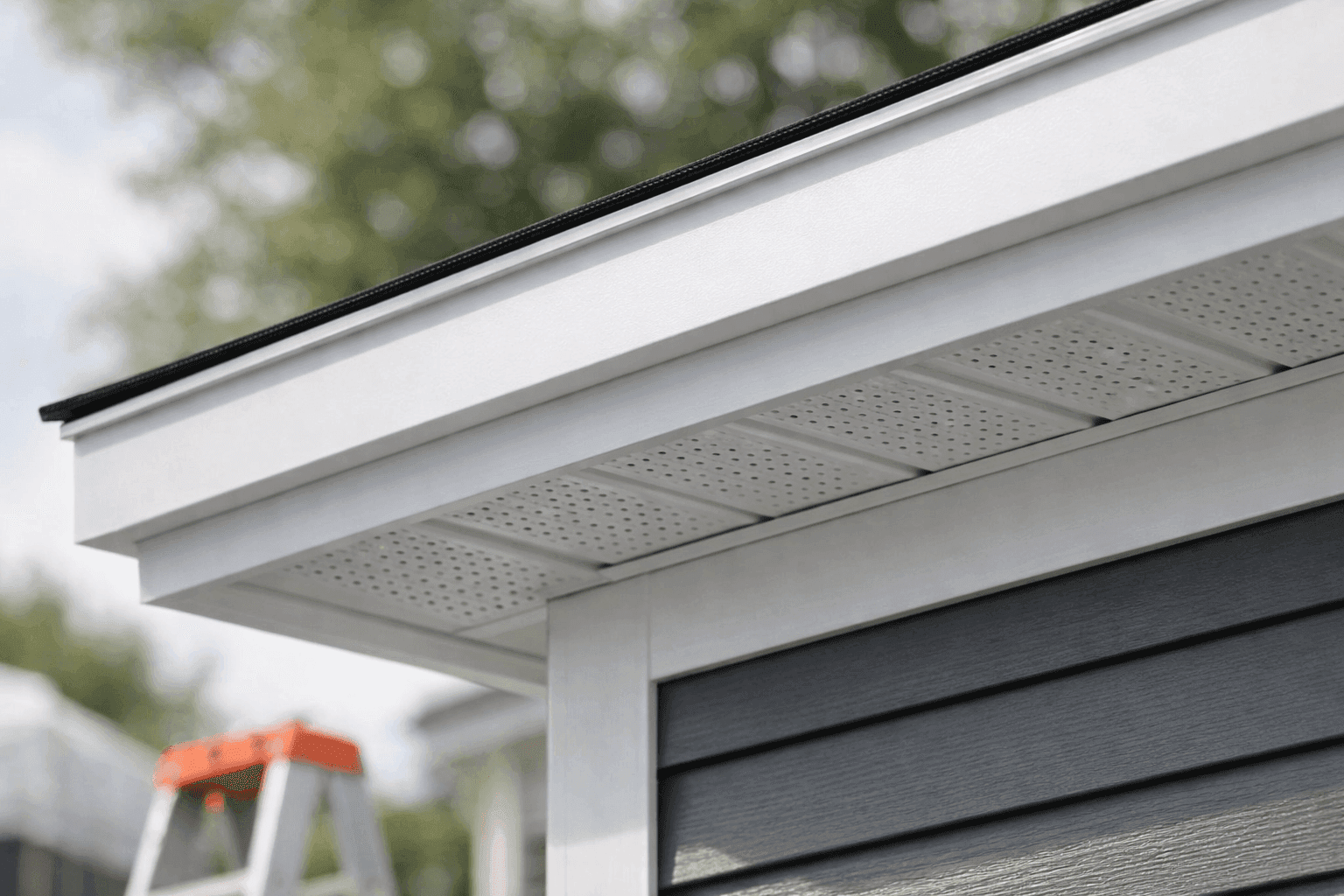
Soffit is the horizontal surface tucked underneath the roof overhang. Picture standing under your eaves and looking straight up—that’s the soffit. It’s more than a pretty cover; it lets your attic breathe and keeps critters out.
Fascia sits right at the edge of your roof, running along the lower side of the overhang. Think of it as the crisp, finishing trim that gives your roofline definition. It’s also where gutters are mounted.
Common materials for soffit and fascia include:
- Vinyl (low maintenance, budget-friendly)
- Aluminum (durable, resists rot)
- Wood (classic look, requires upkeep)
- Fiber cement (resists pests and moisture)
Each material comes with its own strengths. Your choice depends on your climate, style, and how much maintenance you want to take on.
Why Are They Important?
It’s easy to overlook these parts. But soffit and fascia play multiple roles:
- Ventilation: Soffit panels are often vented, allowing airflow into the attic. This keeps moisture and heat under control, helping your insulation work better and extending the life of your roof.
- Moisture Control: Fascia boards protect the roof and interior from rain and melting snow. Without them, water can creep under your shingles and into your walls.
- Pest Prevention: Sealed soffit and fascia stop birds, squirrels, and insects from nesting in your attic.
- Aesthetics: Clean lines and fresh paint on your fascia give your whole property a finished, polished look. Think of them as the picture frame for your home.
Signs of Trouble: When Things Go Wrong
How do you know your soffit or fascia needs attention? Watch out for:
- Peeling or blistering paint
- Water stains or mold
- Sagging or missing panels
- Rotting or crumbling wood
- Rust spots (on metal fascia)
- Evidence of pests
If you spot any of these, it’s time for a closer look. Left unchecked, minor issues can quickly escalate into expensive repairs.
Maintenance and Common Problems 🧰
Routine maintenance is your best insurance. Here’s what to watch for:
- Rot: Wood soffit and fascia are vulnerable to moisture. Even a small leak can start the rot process.
- Peeling Paint: This isn’t just about looks; flaking paint means moisture is getting in.
- Loose Boards: Heavy winds, storms, or even old age can pull boards loose, creating gaps for water and pests.
Maintenance tips:
- Clean soffits and fascia at least twice a year.
- Inspect after major storms.
- Repaint or reseal as needed (especially wood).
- Check gutters for leaks and clogs that could direct water onto boards.
Repair or Replace? Knowing What’s Next
Is it better to patch things up, or is a full replacement in order? Here’s a simple rule of thumb:
- Repair if the damage is isolated—like a small section of rot or a single loose panel.
- Replace if there’s widespread rot, warping, or structural weakness.
A professional siding contractor can assess whether your soffit and fascia have life left in them or if it’s time for new materials. For hands-on help, our soffit and fascia repair team is just a call away.
Quick Safety Checklist
Before you grab a ladder, pause and check:
- Are your gutters secure?
- Do you see electrical wires near the work area?
- Is your ladder stable and on level ground?
- Do you have the right protective gear (gloves, eyewear)?
If you have doubts, it’s safer to call a pro. Falls are one of the most common home repair accidents, according to the U.S. Consumer Product Safety Commission.
DIY vs. Call a Pro
Changing a light bulb? DIY is great. Fixing soffit and fascia? It depends.
DIY: Cleaning and basic painting are safe for most homeowners. Minor caulking or a small patch job is doable—if you’re comfortable on a ladder and have the right tools.
Call a Pro: For anything involving structural repairs, widespread rot, or large replacement sections, bring in experienced help. Improper installation can lead to leaks, mold, and costly interior damage.
What to Expect When Pros Arrive
Professional siding contractors arrive with the right tools, materials, and know-how. Here’s a typical checklist:
- Full inspection of soffit, fascia, and related siding
- Identification of all problem areas (including hidden issues)
- Removal of damaged sections
- Installation or repair using quality materials
- Sealing, painting, and finishing for a seamless look
At POM Siding, our crews work efficiently and respect your property—minimizing disruption and leaving your exterior cleaner than we found it.
Seasonal Considerations 🍂
Winter, spring, summer, or fall—each season brings its own challenges.
- Spring: Check for winter damage, especially after ice or heavy snow.
- Summer: Look for signs of insect activity and sun-faded paint.
- Fall: Clean leaves and debris from gutters and soffits.
- Winter: Watch for ice dams and icicles, which can loosen fascia and cause leaks.
Proactive checks keep small issues from becoming emergencies.
Common Mistakes to Avoid
It’s easy to make errors with soffit and fascia care. Here’s what we see most:
- Using the wrong paint or sealant (causing peeling and moisture issues)
- Covering up rot instead of replacing it
- Blocking ventilation with insulation or paint
- Ignoring gutters—clogged or leaky gutters can destroy fascia in a single season
Stay alert, and your home will thank you.
Siding, Soffit, and Fascia: The Big Picture
Soffit and fascia are part of a larger system that keeps your property safe and efficient. They work in tandem with the siding, gutters, and roof. When one element fails, it can put the rest at risk.
For integrated solutions—like soffit and fascia installation or full siding repair—choose a contractor who understands the whole picture, not just one piece.
Costs & Time Factors
How much does it cost to repair or replace soffit and fascia? It varies. Factors include:
- Material type (vinyl, aluminum, wood, fiber cement)
- Extent of damage
- Height and accessibility of your eaves
Small repairs may be done in an afternoon. Full replacement or custom solutions can take a few days, especially for larger or commercial properties.
When It’s an Emergency 🚨
If you have widespread rot, active leaks, or visible pest infestations, don’t wait. Structural damage can spread fast, leading to costly repairs inside your walls and attic.
Storm damage, such as wind-torn panels or hanging boards, also calls for immediate attention. Siding and fascia emergencies can impact insurance claims, so document damage and call a pro right away.
Siding, Soffit, and Fascia: Your Local Resource
Need help with soffit and fascia repair near you? POM Siding serves residential and commercial clients across the region. Our experienced team is ready for everything from small fixes to full exterior upgrades.
For tailored advice or to schedule a siding inspection in Ramapo, see our siding services in Ramapo for more info.
Frequently Asked Questions
How often should I check my soffit and fascia?
Twice a year—ideally spring and fall—or after major storms.
What’s the most durable material?
Aluminum and fiber cement are both long-lasting and low maintenance, but the right choice depends on your climate and style.
Can I paint over old soffit and fascia?
You can, but only after proper cleaning and prepping. Never paint over rot or peeling areas. Address repairs first.
Are there eco-friendly options?
Yes! Many manufacturers offer recycled-content vinyl, engineered wood, and fiber cement options with lower environmental impact.
Final Thoughts: Protect the Details That Protect Your Home
Soffit and fascia may seem small, but they play a huge role in your property’s health. Don’t let hidden damage fester. Regular checks, proper maintenance, and prompt repairs keep your home or business looking sharp and standing strong.
Call POM Siding now — or reach us anytime at 888-870-1065 .