Siding Material Comparison: Pros, Cons, and Lifespans
Choosing siding for your home or business can feel like picking a new pair of shoes for a marathon. It needs to look good, last long, and fit your daily life—rain or shine.
At POM Siding, we know the stakes are high. The right siding will guard your property for decades. The wrong one can mean headaches, leaks, and regret. Let’s make sense of the options together.
Siding Material Options 🏠
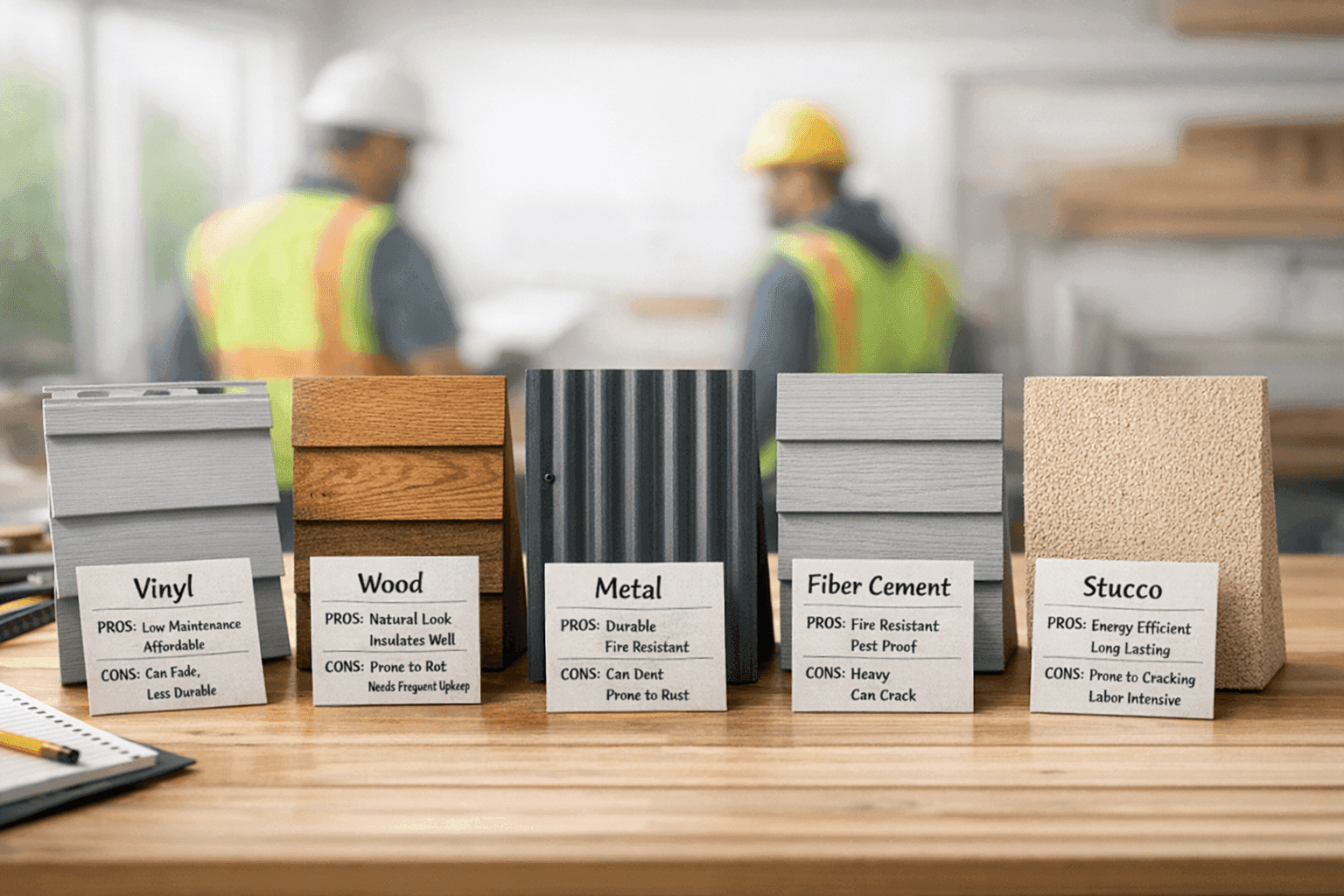
Not all siding is created equal. Here are the five most popular materials for residential and commercial properties:
- Vinyl Siding: Lightweight, flexible, and available in many colors and styles.
- Wood Siding: Timeless appearance with options like cedar, pine, or redwood.
- Metal Siding: Typically steel or aluminum, known for strength and sleek modern looks.
- Fiber Cement Siding: A blend of cement, sand, and cellulose fibers, mimicking wood or masonry.
- Stucco Siding: Cement-based, applied in layers for a solid, classic finish.
Each type brings something different to the table. Some are like raincoats—practical and tough. Others are more like cashmere—beautiful, but needing extra care.
Lifespan and Durability
How long will your siding last? It’s a question of material, maintenance, and weather.
- Vinyl Siding: Lasts 20–40 years. It resists rot and pests, but can crack in extreme cold or fade in relentless sun. Occasional repairs for impact damage may be needed.
- Wood Siding: With diligent care, wood can last 20–40 years or more. But without regular sealing and painting, it’s vulnerable to moisture, insects, and rot.
- Metal Siding: Steel and aluminum siding can reach 40–70 years with minimal upkeep. Both resist fire and insects. Aluminum may dent; steel can rust if coating is damaged.
- Fiber Cement Siding: One of the toughest options—expect 30–50 years. It shrugs off fire, pests, and rot, though it’s heavier and may require repainting over time.
- Stucco Siding: Properly applied and maintained, stucco can endure 50–80 years. It handles heat and fire well, but can crack in areas with shifting soil or frequent freeze-thaw cycles.
For all types, regular inspections and quick repairs—like Siding Replacement—extend lifespan.
Cost Comparison
Budget is always part of the decision. Here’s how these materials stack up (installed cost per square foot varies by region and detail):
- Vinyl Siding: Most affordable. Lower initial costs and minimal maintenance.
- Wood Siding: Medium to high. Material is pricier, and upkeep (painting, sealing) adds up.
- Metal Siding: Medium. Aluminum typically costs less than steel. Higher upfront, but low maintenance.
- Fiber Cement Siding: Comparable to wood or a bit less. Labor costs can be higher due to weight.
- Stucco Siding: High initial cost, especially with multi-layer application. Maintenance is modest but repairs can be specialized.
Factor in not just what you spend now, but also what you’ll spend in 5, 10, or 20 years. Maintenance and repairs often tip the scale.
Appearance and Curb Appeal
Siding isn’t just armor—it’s your property’s first impression.
- Vinyl offers endless colors and textures, but seams may be visible.
- Wood is the gold standard for natural beauty and character.
- Metal delivers crisp, modern lines and bold color options.
- Fiber Cement mimics wood, stone, or brick convincingly.
- Stucco brings a smooth, classic finish, especially for Mediterranean or Southwest styles.
Color consultation can help ensure you get the look you want. Our team offers siding-material-consultation for tailored advice.
Maintenance Needs
Time is valuable. Some siding asks for little; others need regular attention.
- Vinyl: Occasional washing. Inspect for cracks.
- Wood: Paint or seal every 3–7 years. Check for rot and pests.
- Metal: Hose down as needed. Watch for dents or scratches.
- Fiber Cement: Repaint every 10–15 years. Inspect caulking.
- Stucco: Hose off dirt. Patch cracks promptly to avoid moisture issues.
Routine checks keep small issues from becoming big problems.
Energy Efficiency and Insulation
Siding can help keep your utility bills in check. Here’s how materials compare:
- Vinyl: Some products include insulated backing for better performance.
- Wood: Naturally insulating but needs added layers for best efficiency.
- Metal: Conducts heat and cold. Insulation beneath panels is key.
- Fiber Cement: Dense, but not highly insulating. Pair with quality insulation.
- Stucco: When applied over foam board, offers strong thermal performance.
Ask about insulation installation to boost comfort and efficiency.
Eco-Friendliness 🌱
If sustainability is a priority:
- Vinyl: Made from PVC. Not biodegradable, but some recycling options exist.
- Wood: Renewable, especially if sourced responsibly. Needs chemical treatments.
- Metal: Highly recyclable. Long lifespan reduces replacement waste.
- Fiber Cement: Lasts long; production uses energy, but it’s inert and stable once installed.
- Stucco: Materials are natural, but application is energy-intensive.
Eco-friendly siding options can balance beauty and responsibility.
Fire and Weather Resistance
Safety matters, especially in high-risk zones.
- Vinyl: Will melt or burn in extreme heat.
- Wood: Flammable unless specially treated.
- Metal: Non-combustible, rated for fire resistance.
- Fiber Cement: Fire-resistant—meets many local codes.
- Stucco: Excellent fire protection. Also stands up to wind and rain when maintained.
Always check local building codes, like those from the International Code Council (ICC), for requirements in your area.
Common Problems and How to Prevent Them
- Vinyl: Cracks or warps with impact or temperature swings.
- Wood: Rot, termites, peeling paint.
- Metal: Dents, rust (steel), color fading.
- Fiber Cement: Cracking if installed poorly, moisture issues at seams.
- Stucco: Cracking from settling or moisture intrusion.
Prevention starts with good installation, regular cleaning, and prompt repairs.
When to Replace or Repair Siding
Watch for:
- Warping, cracking, or bulging panels.
- Loose or missing boards.
- Faded or peeling paint.
- Water stains inside or outside.
- High energy bills due to drafts.
If you spot these signs, a professional siding inspection is smart. For residential siding, our team handles everything from Residential Siding.
DIY or Call a Pro?
Some tasks—like washing vinyl or touching up small cracks—are homeowner-friendly. But for big jobs, specialized tools and know-how are essential. Improper installation risks leaks, structural damage, or even code violations.
Professional crews ensure:
- Materials are handled safely.
- Weatherproofing is complete.
- Flashing, caulking, and ventilation are done right.
Timeline and Disruption
Installation times vary:
- Vinyl and Metal: Fastest—often a few days for average homes.
- Wood and Fiber Cement: Slower—extra care needed for cutting and sealing.
- Stucco: Longest—multi-layer process can take over a week.
Expect some noise and dust. Plan accordingly, especially for businesses.
Siding for All Seasons 🌦️
Your climate shapes the best choice. In regions with wild temperature swings, fiber cement or metal may win out. For dry, mild climates, stucco shines. In areas with frequent storms, impact resistance and waterproofing are key—don’t overlook regular gutter repair and soffit work.
Warranty and Support
Most manufacturers offer limited warranties—10 to 30 years is common. Be sure to read the fine print. Some require professional installation or regular maintenance logs.
Our team can help navigate warranty questions and provide support throughout your siding’s life.
Making the Right Choice
No one material is perfect for everyone. Your decision should reflect:
- Climate and local hazards
- Property style and value
- Budget for both now and later
- Desired level of maintenance
- Sustainability goals
We help you weigh trade-offs, not just sell the trendiest option.
Ready to talk siding that stands the test of time? Call POM Siding now — or reach us anytime at 888-870-1065 .