How to Safely Install Siding on Two-Story Homes
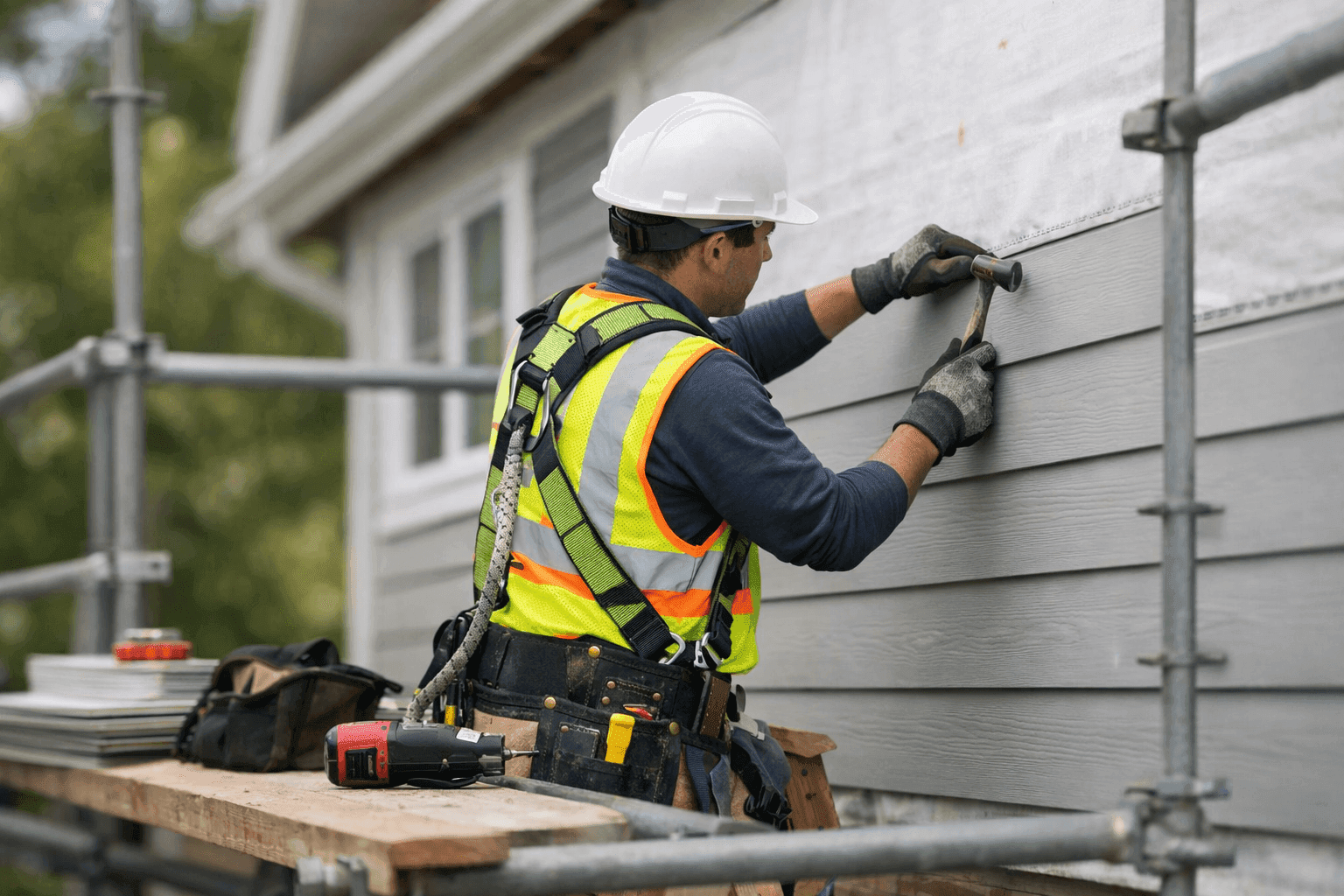
Does the thought of replacing siding on your two-story home leave you dizzy? You’re not alone. Even seasoned DIYers hesitate when ladders start to climb past the first story. At POM Siding, we understand the risks—and the rewards—of a job done right and safe. Your home’s protection depends on solid siding installation. Let’s walk through what it takes to do it safely.
Safety Risks of Two-Story Installation 🦺
Working high above the ground is not just intimidating—it’s dangerous. Every year, OSHA reports falls as a leading cause of serious jobsite injuries and deaths. That risk doubles or triples with a two-story house. Wind gusts, shifting ladders, and uneven ground can turn a routine job into a medical emergency.
Loose tools, falling debris, and electrical hazards only add to the mix. Even a small misstep can result in costly damage to your home or, worse, personal injury. That’s why two-story siding installation is never just “another weekend project.” It’s a high-wire act where every move matters.
Required Equipment and PPE
Tackling siding on a two-story home is not about grabbing the nearest ladder and hoping for the best. Here’s what professionals rely on:
- OSHA-approved fall protection harnesses and lifelines
- Sturdy extension ladders or mobile scaffolding, rated for residential or commercial use
- Hard hats, safety glasses, and cut-resistant gloves
- Non-slip boots with solid ankle support
- Secure tool belts (so nothing drops unexpectedly)
- Hearing protection (especially for power tools)
Before the first board comes off, a full site assessment checks ground stability, weather conditions, and overhead obstacles. The right gear isn’t just about following rules—it’s about coming home safe.
Professional Installation Steps
When you hire POM Siding for siding-replacement, here’s how we approach a two-story project:
- Site Setup: Clear the area of obstacles, pets, and people. Set up scaffolding or ladders on level ground, and check all equipment for defects.
- Safety First: Crew members clip into lifelines before ascending. We always follow OSHA’s fall protection standards (29 CFR 1926.501).
- Old Siding Removal: Remove existing siding, soffit, and fascia in manageable sections. Debris goes straight into chutes or bins below.
- Inspection and Repairs: Check the sheathing, insulation, and framing. Make any necessary repairs before continuing.
- Weatherproofing: Install flashing and house wrap to shield the structure from moisture.
- Precise Installation: Install your chosen siding—be it vinyl, fiber cement, or another material—measuring and cutting at ground level whenever possible.
- Detail Work: Replace or repair trim, soffits, fascia, and gutter connections. Tidy up with proper caulking and sealing to prevent leaks.
- Cleanup and Final Inspection: Remove all equipment and debris. Complete a top-to-bottom inspection for quality and safety.
Quick Safety Checklist Before You Start
- Are all ladders and scaffolds properly rated and inspected?
- Is your PPE in good condition and fitted correctly?
- Have weather conditions (wind, rain) been checked?
- Are all power lines and electrical hazards identified?
- Is there a ground crew for support and communication?
If you answer “no” to any of these, stop. It’s not worth the risk.
DIY vs. Call a Pro
Some home projects are perfect for a Saturday afternoon. Two-story siding installation isn’t one of them. Why? Because one wrong move is all it takes for disaster. The stakes are high—literally.
Professionals bring not just experience, but also specialized tools, teamwork, and a plan for every “what if.” For homeowners, saving a little now can cost a lot later. If you’re searching for “Soffit and Fascia Repair near you,” chances are you appreciate the value of a safe, expert crew.
What Pros Do On Arrival
When POM Siding arrives, you’ll see a well-organized team:
- Double-checking gear and harnesses
- Reviewing the weather and site layout
- Setting up communication (radios, hand signals)
- Assigning clear roles for each crew member
There’s no “winging it” on a two-story installation. Every step is mapped out, every tool is accounted for.
Prevention & Maintenance
Proper installation is just the start. Your siding faces sun, wind, rain, and hail—sometimes all in one season. To keep it strong:
- Inspect siding and trim twice a year for cracks, gaps, or loose sections.
- Clean gutters regularly to prevent water backup.
- Schedule annual maintenance, especially after storms.
- Touch up paint or sealant as soon as you spot wear.
Routine care is your home’s shield against weather and time.
Costs & Time Factors
The price and timeline for a two-story siding project depend on:
- The size and height of your home
- The type of siding (vinyl, fiber cement, wood, or metal)
- Whether repairs are needed beneath the old siding
- Weather and access challenges
Generally, expect a two-story job to take several days. Rush jobs cut corners—never a good idea at this height.
When It’s an Emergency
Storms can rip siding off in seconds. If you see exposed sheathing, water leaks, or hanging panels, act fast. Emergency siding services prevent further damage. Until help arrives, avoid the area and keep everyone—especially kids—away from hazards.
Seasonal Considerations
Winter brings icy ladders and frozen hands. Summer means heat stress and slippery sweat. Professionals know how to adapt: scheduling work during mild weather, taking frequent breaks, and monitoring for heat or cold-related illness.
Common Mistakes
- Using the wrong fasteners or nails (leads to loose panels)
- Overlapping joints incorrectly, inviting water inside
- Skipping flashing around windows and doors
- Ignoring minor repairs that become big headaches later
These shortcuts can turn a beautiful exterior into a costly lesson.
Signs of Trouble
Watch for these red flags:
- Warped or buckling panels
- Water stains or mold inside the walls
- Peeling paint or caulk
- Gaps around windows, doors, or corners
Early detection means simpler, safer repairs.
Timeline & Disruption
Expect some noise, dust, and temporary inconvenience. A good crew minimizes disruption by keeping the worksite tidy and neighbors informed. Most two-story projects wrap up in under a week—weather permitting.
Materials and Siding Choices
Fiber cement, vinyl, and metal siding each have pros and cons. Fiber cement stands up to weather but requires heavy lifting. Vinyl is lighter and easier to install. The key is matching material to your climate, budget, and style. For help sorting your options, our fiber cement siding installation guide offers more details.
Siding Inspection: Keeping Your Investment Safe
After installation, schedule regular siding inspections. Even the best job needs a watchful eye. Look for shifting panels, cracked trim, or signs of moisture. Fast action keeps small issues from becoming major repairs.
Local Expertise Matters
Two-story homes in New Mexico face unique challenges—intense sun, dust, and high winds. If you need a siding contractor for your two-story property, our Albuquerque siding pros are here to help with the right solutions for your climate.
Closing Thoughts
Two-story siding installation isn’t just about curb appeal—it’s about protecting your home and everyone inside. With the right safety measures, equipment, and experienced hands, your project will be solid from the ground up.
Call POM Siding now — or reach us anytime at 888-870-1065 .