Fiber Cement vs. Stucco: Which Siding Is Right for You?
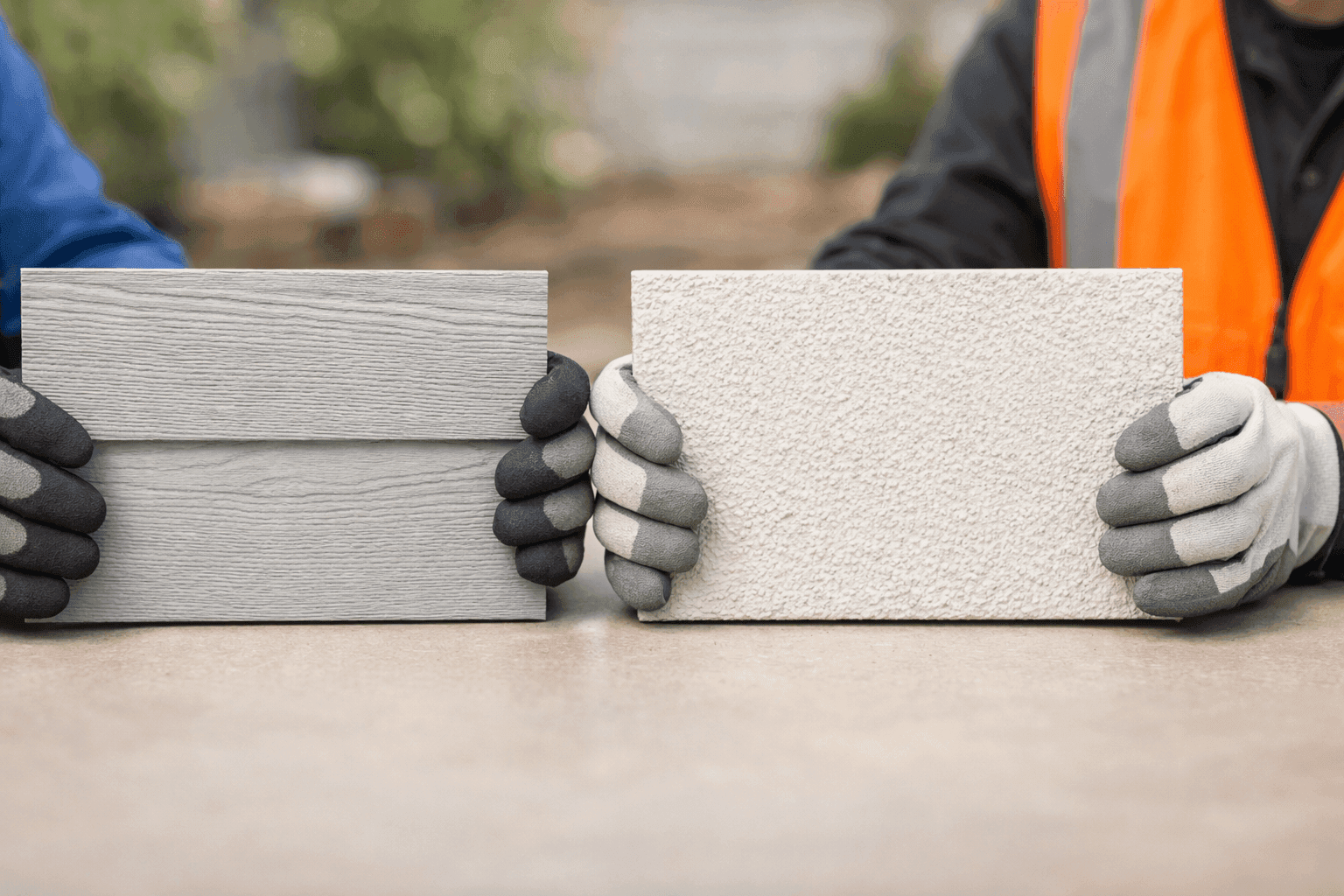
Are you standing in your driveway, looking at your property, wondering which siding will stand the test of time? You’re not alone. Choosing between fiber cement and stucco can feel like standing at a fork in the road—one path promises resilience, the other classic charm. At POM Siding, we’ve helped countless homeowners and business owners face this very crossroads.
Let’s break it down, step by step. With decades of hands-on experience in siding—from soffit and fascia repair near you to custom siding solutions—we’re here to help you understand the differences. It’s about more than curb appeal; it’s about making a choice you can live with.
Pros and Cons of Each Material
Fiber Cement Siding: The Modern Workhorse 🏗️
Fiber cement siding is a blend of cement, sand, and cellulose fibers. It’s like armor for your building—tough, reliable, and built to last.
Pros:
- Durability: Resists rot, fire, and termites.
- Low Maintenance: Won’t warp or buckle in extreme weather.
- Versatility: Mimics wood, stone, or stucco textures.
- Fire Resistance: Non-combustible—meets strict building codes.
Cons:
- Weight: Heavier than vinyl or wood, so installation takes muscle.
- Installation Cost: Labor-intensive. May cost more upfront.
- Painting Needs: Needs repainting every 10-15 years (longer than wood, less than vinyl).
Stucco Siding: Old-World Charm Meets Modern Living 🏛️
Stucco is made from cement, sand, lime, and water, applied in layers. It’s the stuff of Spanish villas and Southwest charm.
Pros:
- Aesthetic Appeal: Classic, seamless look with deep architectural character.
- Insulation: Naturally helps regulate indoor temps.
- Customizable: Can be tinted in almost any color, textured in endless ways.
Cons:
- Cracking: Susceptible to hairline cracks, especially with shifting foundations.
- Moisture Sensitivity: Needs proper drainage. Trapped water can lead to mold.
- Labor Intensive: Application is a skilled craft—one misstep and you’ll spot it forever.
Installation Differences
Fiber Cement: Heavy Lifting and Precision
Installing fiber cement siding is like assembling a puzzle—every piece must fit perfectly. Due to its weight, it often takes a team. Specialized tools are required for cutting and fastening. Installers must follow manufacturer specs exactly; skipping steps can void warranties.
- Prep: Walls must be smooth, moisture barriers installed.
- Cutting: Special blades needed—dust must be controlled (OSHA has strict silica dust guidelines).
- Attachment: Fastened with corrosion-resistant nails. Gaps sealed against water intrusion.
Stucco: Layers of Skill
Stucco is hand-troweled in three coats—scratch, brown, and finish. Each layer cures before the next goes on. The process can take several days, sometimes longer in damp weather.
- Prep: Metal lath or foam board goes up first.
- Mixing: Fresh batches for every stage.
- Application: Each layer must cure, or cracks will form later.
Both systems require an eye for detail and respect for safety codes. For commercial projects or new builds, always check local building code requirements.
Durability and Maintenance
Fiber Cement: Built for the Long Haul
Picture a sturdy shield on your home. Fiber cement holds up against hail, wind, heat, and insects. It won’t burn, and it laughs in the face of woodpeckers.
Maintenance Tips:
- Hose down once or twice a year.
- Repaint as needed (usually every decade or more).
- Inspect caulking at joints and windows—reseal if you notice gaps.
Stucco: Strong, With a Soft Side
Stucco stands up well in dry climates. It shrugs off sun and wind, but heavy rain or freezing temps can challenge it. Small cracks are normal but need patching to keep water out.
Maintenance Tips:
- Inspect for cracks each season—patch right away.
- Clean with a soft-bristle brush and mild soap.
- Check for signs of water damage at the base and around windows.
Pro tip: Annual siding inspection—especially after storms—can prevent small issues from ballooning into costly repairs.
Cost and Aesthetics
Fiber Cement: Investment Upfront, Savings Over Time
Upfront, fiber cement siding costs more than vinyl but less than premium wood or stone. Labor costs can add up due to the weight and special tools. Over time, lower maintenance balances things out.
Average Cost Factors:
- Material thickness and brand.
- Complexity of home design (gables, trim).
- Local labor rates.
Looks: Crisp, modern, or classic—fiber cement can mimic nearly any style. Paint it any color, add custom trim, or choose a woodgrain finish for warmth.
Stucco: Custom Looks, Variable Pricing
Stucco’s cost depends on the finish, color tinting, and labor. It’s generally less expensive than stone but more than vinyl. Repairs can be tricky; a perfect color match is tough years down the road.
Average Cost Factors:
- Number of layers and finish type.
- Prep work (older homes may need more).
- Regional labor rates.
Looks: Timeless Southwest, Mediterranean villa, or clean modern—stucco adapts. Soft, seamless, and rich in texture. Limited only by your imagination.
Siding Life Expectancy: Which Lasts Longer?
Fiber cement siding, when properly installed and cared for, can last 30–50 years or more. Stucco, if maintained and in the right climate, can match that lifespan. However, harsh winters or shifting soils can shorten a stucco system’s life.
Safety and Code Compliance
Both materials meet modern safety codes when installed by professionals. Fiber cement’s fire resistance is especially valued in wildfire-prone areas (see National Fire Protection Association guidelines). Stucco’s performance depends on good drainage and proper flashing.
DIY or Call a Pro?
Siding isn’t a weekend project. Fiber cement needs special gear and a strong crew. Stucco involves artful troweling and patience. If you want the job done right—and up to code—trust seasoned pros like POM Siding.
Weather Factors: Think Local
- Fiber cement: Handles humidity, rain, snow, and pests.
- Stucco: Shines in dry, mild climates. Needs extra steps in wet or cold conditions.
Not sure which is right for your region? Our siding material consultation can help you weigh the pros and cons for your climate and property type.
Common Mistakes to Avoid
- Skipping moisture barriers (for both).
- Rushing the curing process (stucco).
- Mismatched paints or finishes.
- Ignoring tiny cracks or missing caulk.
Siding and Curb Appeal: First Impressions Matter
Curb appeal isn’t just about color or texture—it’s about how your siding fits the architecture and personality of your home or business. Fiber cement gives you crisp lines and flexibility. Stucco offers softness and old-world romance.
For a real-world look at siding projects, check out our high-quality installations in Shawnee siding services.
Practical Tips for Home and Business Owners
- Schedule regular siding inspections (twice a year is ideal).
- Clean with low-pressure water—avoid harsh chemicals.
- Repair cracks and seal gaps before winter or wet seasons.
- Ask about eco-friendly siding options if sustainability is a priority.
Frequently Asked Questions
Q: Does fiber cement siding need to be painted?
A: Yes, but not often. Most brands come prefinished; repaint every 10–15 years.
Q: Is stucco energy efficient?
A: Stucco adds a layer of insulation but works best with additional insulation installed.
Q: Can I mix siding types?
A: Absolutely! Many properties blend fiber cement with stucco, wood, or metal for dramatic effect.
Ready to Weigh Your Options?
Choosing between fiber cement and stucco siding isn’t just a practical call—it’s a reflection of your property’s personality and your long-term goals. Whether you’re focused on resilience, maintenance, or making a statement, POM Siding is here to help with everything from fiber cement siding installation to soffit and fascia repair near you.
Call POM Siding now — or reach us anytime at 888-870-1065 .