Eco-Friendly Siding Options: Sustainable Choices for Homes & Businesses
Does your siding say as much about your values as it does about your property? If you’re worried about energy bills, stormy weather, or leaving a heavy mark on the planet, you’re not alone. More homeowners and businesses want siding that stands up to time and treads lightly on the earth.
At POM Siding, we understand these concerns. Our team has guided hundreds of projects towards greener, smarter solutions—balancing durability, curb appeal, and sustainability every step of the way.
Why Choose Eco-Friendly Siding? ♻️
Imagine your property as a cozy sweater, shielding you from the elements. Siding is that layer. But not all siding is created equal. Some choices lock in heat, minimize drafts, and resist rot. Others, unfortunately, are resource-heavy or quick to fail.
Eco-friendly siding strikes a careful balance:
- Reduces energy waste—helping keep heating and cooling costs in check.
- Minimizes environmental impact—by using renewable, recycled, or long-lasting materials.
- Improves indoor comfort—by better sealing out moisture and drafts.
- Boosts property value—as more buyers look for green upgrades.
The right siding isn’t just an upgrade—it’s an investment in your future and the environment’s. This is true whether you own a home or a commercial building.
Sustainable Material Options
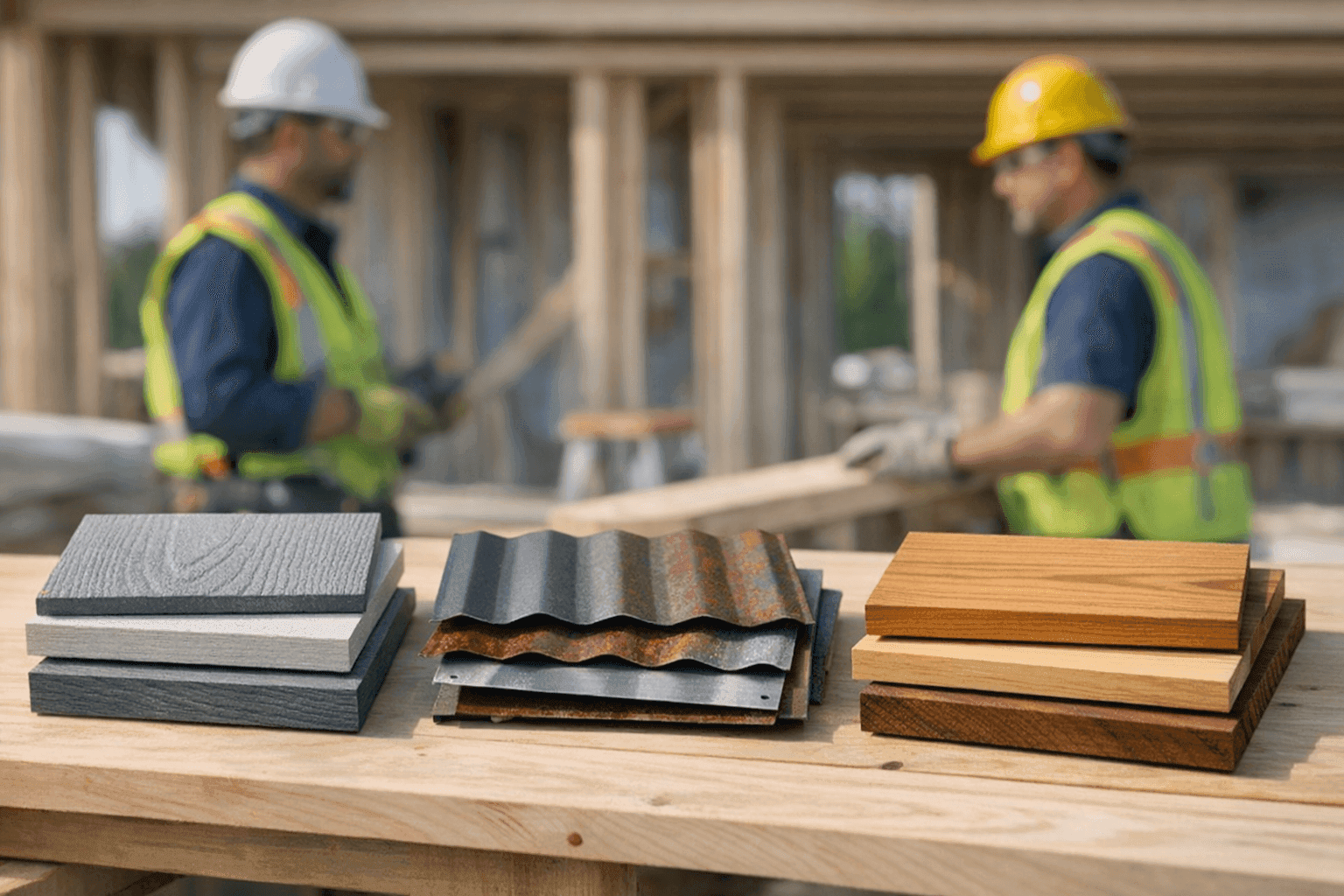
Not sure where to start? Let’s look at three popular eco-friendly siding materials. Each brings unique strengths and fits different tastes, climates, and budgets.
Fiber Cement Siding
Fiber cement is a blend of cement, sand, and cellulose fibers. It’s tough as nails—resistant to fire, pests, and wind. Even better, it doesn’t warp or rot in harsh weather.
- Longevity: 30+ years with minimal upkeep.
- Green factor: Made from abundant materials; lasts decades, reducing waste.
- Looks: Can mimic wood, stucco, or stone.
Wood Siding
Wood siding—think cedar, pine, or redwood—is a classic. For the greenest approach, look for sustainably harvested or reclaimed wood certified by the Forest Stewardship Council (FSC).
- Natural insulation: Wood helps regulate indoor temps.
- Renewable: When sourced responsibly.
- Warm, timeless appearance: Ages beautifully with proper care.
Recycled Metal Siding
Metal siding, such as steel or aluminum, can be made from recycled materials. It’s practically armor for your building.
- Durable: Excellent against wind, hail, and fire.
- Recyclable: End-of-life panels can be recycled again.
- Low maintenance: A rinse and you’re done.
Benefits and Certifications 🏅
Choosing sustainable siding isn’t just about the environment. It’s about peace of mind, too.
- Lower energy bills: Well-chosen siding acts as a thermal barrier.
- Longer lifespan: Durable materials mean fewer replacements.
- Healthier indoor air: Some materials, like fiber cement, resist mold and pests.
- Resale appeal: Eco-conscious upgrades attract savvy buyers.
Certifications to look for:
- FSC: For responsibly managed wood.
- GreenGuard: Ensures products have low chemical emissions.
- LEED points: Many eco-friendly siding options contribute to LEED certification for buildings.
When you’re planning a change, always ask for documentation. Transparency matters.
Implementation Tips
Switching to green siding isn’t just about picking a material. It’s about smart choices, step by step.
- Consult a professional: Schedule a siding material consultation to match your needs and climate.
- Plan for insulation: Pair new siding with upgraded insulation for maximum efficiency.
- Mind the details: Don’t forget soffit and fascia repair near you—these keep your new siding working its best.
- Check local codes: Municipalities may have rules on materials or fire safety. The International Building Code (IBC) and local ordinances are must-reads.
- Consider color: Lighter shades reflect sunlight, keeping buildings cooler.
- Ask about recycling: When replacing old siding, request responsible disposal or recycling.
Signs It’s Time for a Sustainable Upgrade
Is your current siding showing its age? Here are a few red flags:
- Peeling paint or bubbling
- Warping, cracking, or splitting
- Persistent drafts or energy spikes
- Water stains or mold growth
If you spot these, sustainable siding replacement could be the best next step.
DIY or Call a Pro?
Some folks love a good weekend project. But siding installation is like fitting armor: every panel, nail, and sealant matters. Mistakes can lead to leaks or energy loss.
Pros bring:
- Code knowledge and safety gear
- Precision tools
- Efficient, seamless results
If you want peace of mind—and lasting performance—professional installation is worth it.
Siding for Every Season
Eco-friendly siding isn’t just for warm climates. Fiber cement resists snow and ice. Metal shields against hail. Properly sealed wood handles seasonal swings with grace.
For best results:
- Schedule annual checks, especially after storms.
- Keep gutters clear to prevent water damage.
- Touch up paint or sealant when needed.
Life Cycle Matters
Think of siding like a marathon runner, not a sprinter. A longer-lasting material means fewer replacements—less waste, less hassle.
- Fiber cement: Decades of protection.
- Recycled metal: Can last 40+ years.
- Properly maintained wood: 20–40 years.
When your siding finally retires, choosing recyclable materials keeps the cycle going.
Energy Efficiency: Small Steps, Big Impact
Green siding isn’t only about the outer shell. It’s about the whole system.
- Add insulation during installation.
- Seal every joint to stop drafts.
- Ventilate: Good soffit and fascia work keeps moisture and heat moving as they should.
These steps can shave money off bills and make your space more comfortable—every season.
Maintenance & Weatherproofing
Owning eco-friendly siding doesn’t mean you can forget maintenance. Instead, it’s about working smarter.
- Clean with mild soap and water.
- Inspect after severe weather.
- Repair small cracks or gaps quickly.
- Re-seal or paint wood as needed.
Weatherproofing details—like flashing and caulking—matter as much as the siding itself. And if you’re in a region with wild weather, consider POM Siding’s storm damage repair options.
Common Pitfalls to Avoid
- Choosing material for looks only. Performance matters more.
- Skipping professional consultation.
- Overlooking local code or HOA requirements.
- Neglecting annual maintenance.
Frequently Asked Questions
Q: Will eco-friendly siding cost more?
A: Upfront, sometimes. But lower maintenance and energy savings often pay off.
Q: Can I keep my old siding?
A: If it’s in good shape, sometimes. But upgrading to modern, efficient materials is usually best for comfort and value.
Q: Is eco-friendly siding only for homes?
A: Not at all! Commercial siding options are growing fast.
Emergency? Here’s What to Do
If storm damage or leaks threaten your property, act quickly:
- Cover exposed areas with a tarp.
- Call for emergency siding services.
- Take photos for insurance.
A swift response limits further damage and keeps your investment safe.
Ready for Greener Siding?
Siding is more than a shell—it’s a statement. Choosing eco-friendly options means comfort, savings, and doing your part for the planet. For those researching siding in Racine, see our siding services in Racine for high-quality, sustainable solutions.
Call POM Siding now — or reach us anytime at 888-870-1065 .